Your Fleet.
In Your Pocket.

No Wi-Fi on the site, dirt on the screen, a cracked
tablet running Android 10. The fleet app had to keep
working. We built it in Flutter, offline-first, and
180K field operators at a Fortune 50 manufacturer
use it every shift.
Enterprise fleet management mobile app
We built an offline-first Flutter app for 180K+ field operators across a Fortune 50 manufacturer. Equipment downtime dropped 47%, GPS accuracy sits at 99.7%, and the store rating is a 4.6 from operators who previously ran on paper forms and radios.
The stack goes from BLE equipment pairing through a Yjs / Automerge CRDT-backed local sync (with a transactional path for monetary and stock fields where last-write-wins is wrong) up to AWS Lambda, with Mapbox SDK + Mapbox Movement driving fleet tracking that still works on a 2GB Android tablet with no signal.
Mobile Engineering Approach
-
Framework picked on real hardware — We benchmarked Flutter, Compose Multiplatform (KMP), KMM and React Native (New Architecture) on the operator’s actual 2GB tablets. Flutter won on render performance and offline behaviour at this team’s skill mix, so Flutter it was — with the eval set still on file in case Compose Multiplatform overtakes it next year.
-
Offline-first, but server-authoritative for money — Yjs and Automerge handle the CRDT path for collaborative fields (job notes, photos, diagnostics) so operators don’t see a “retry” screen on reconnect. Parts orders and any monetary field run on a transactional, server-authoritative path — we don’t merge currency.
-
BLE to the machine — Each tablet pairs directly with the equipment over BLE to pull fault codes and sensor readings, so diagnostics still work in a basement with no cell signal.
-
Pilot, then 40 countries — We shipped to 3 pilot sites, iterated on feedback from operators with dirty gloves and cracked screens, then rolled out to 180K users across 40+ countries.
What was actually hard
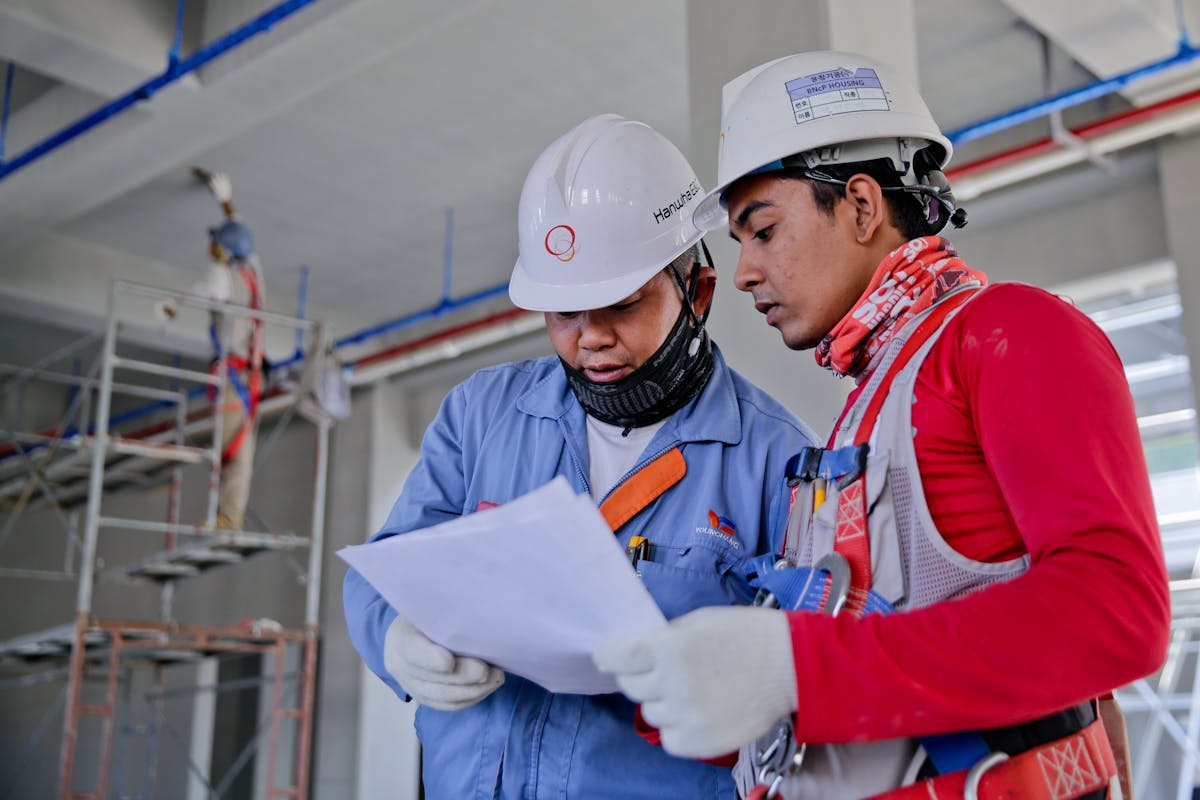
Construction sites don’t have Wi-Fi. The operators run on cheap Android tablets with cracked screens and gloves on. The app had to work offline for hours, sync cleanly on reconnect, and survive being dropped off a truck. We benchmarked Flutter, KMM and React Native on the real hardware before writing a line of production code — the gap on a 2GB tablet was too big to guess at.

Project Outcome
Equipment downtime dropped 47% in the first quarter. Operators traded paper forms and radio calls for a single app that handles diagnostics, maintenance scheduling and parts ordering, and it keeps working when the signal goes.
users > 47% downtime
reduction > 99.7% GPS
accuracy > 4.6★ app store
rating


“Our operators went from paper forms and radio calls to a single app. Equipment downtime dropped 47% in the first quarter.”
@ James H.
VP Field Operations — Fortune 50 Manufacturer
More Case Studies